Saturday, 6 April 2019

Flexible terahertz and FarIR polymer‐supported filter

Sanphuang, Varittha, and Niru K. Nahar. "Flexible terahertz and FarIR polymer‐supported filter." Microwave and Optical Technology Letters 60, no. 11 (2018): 2801-2805.

Abstract

We present the design, fabrication, and measurement of a terahertz (THz) polymer‐supported filter. A periodic structure, frequency selective surfaces (FSS) is employed to provide bandpass characteristic for this filter design with polyimide (PI) film as a substrate. This PI film (13 μm thick) is very thin and thus provides a flexible support to the filter. The average extracted dielectric constant ε r is 3.35 and the average refractive index n s is 1.84. The final filter structure was fabricated using standard microfabrication process. The measured transmission response shows high percentage of transmission (~80%) with the peak at 0.58 THz and sharp roll‐off that covers the broad range of frequency from 0.1 to 1 THz (wavelength of 300 μm‐3000 μm).


… The transmission responses of these PI films were measured using a time domain THz spectroscopy (TPS3000, TeraView Ltd.) as shown in Figure 2. The transmission responses show high percentage of transmission starting …

Pulsed terahertz reflection imaging of tumors in a spontaneous model of breast cancer

Vohra, Nagma, Tyler Bowman, Paola M. Diaz, Narasimhan Rajaram, Keith Bailey, and Magda El-Shenawee. "Pulsed terahertz reflection imaging of tumors in a spontaneous model of breast cancer." Biomedical Physics & Engineering Express 4, no. 6 (2018): 065025.

Abstract

We report the use of reflection-mode terahertz (THz) imaging in a transgenic mouse model of breast cancer. Unlike tumor xenografts that are grown from established cell lines, these tumors were spontaneously generated in the mammary fat pad of mice, and are a better representation of human breast cancer. THz imaging results from 7 tumors that recapitulate the compartmental complexity of breast cancer are presented here. Imaging was first performed on freshly excised tumors within an hour of excision and then repeated after fixation with formalin and paraffin. These THz images were then compared with histopathology to determine reflection-mode signals from specific regions within tumor. Our results demonstrate that the THz signal was consistently higher in cancerous tissue compared with fat, muscle, and fibrous tissue. Almost all tumors presented in this work demonstrated advanced stages where cancer infiltrated other tissues like fat and fibrous stroma. As the first known THz investigation in a transgenic model, these results hold promise for THz imaging at different stages of breast cancer.

for full paper see https://iopscience.iop.org/article/10.1088/2057-1976/aae699/meta


… Experimental Terahertz Imaging System. Terahertz imaging in this work is performed
using a commercial THz system from TeraView, Ltd shown in the diagram in Fig. 2a. An
800 nm pulse from a Ti:Sapphire laser is passed through a beam splitter …

Thursday, 3 January 2019

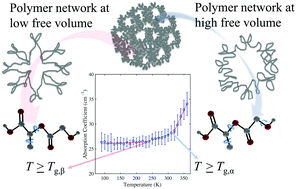
Insights into the structural dynamics of poly lactic-co-glycolic acid at terahertz frequencies

Shmool, Talia A., and J. Axel Zeitler. "Insights into the structural dynamics of poly lactic-co-glycolic acid at terahertz frequencies." Polymer Chemistry (2019).
Graphical abstract: Insights into the structural dynamics of poly lactic-co-glycolic acid at terahertz frequenciesAbstract
The mechanical properties of an amorphous copolymer are directly related to the dynamic processes occurring at the molecular level. Poly lactic-co-glycolic acid (PLGA) is a biodegradable copolymer, and in this work we investigate the dynamics of PLGA and its glass transition behaviour by performing variable temperature terahertz time-domain spectroscopy (THz-TDS) experiments. We correlate PLGA dynamics, as measured at terahertz frequencies, their temperature dependence, molecular weight (MW), lactide toglycolide ratio, and free volume. The THz-TDS data can be used to detect two distinct transition processes, Tβand Tg,α. To complement our analysis, we use dynamic mechanical analysis (DMA) to probe the β- and α-relaxation processes in PLGA, and compare the results obtained from the DMA experiments with those obtained using THz-TDS. The values of Tg,α, as determined from the THz-TDS experiments, are in good agreement with Tg,DSC, determined by calorimetric measurements, and with Tg,DMA, determined by the DMA measurements. We attribute Tβ to the change in dipole moments associated with the β-relaxation process, originating from the local rotation of C–O macromolecular chain segments, and Tg,α to the change in dipole moments due to large segmental motion of the copolymer backbone associated with the α-relaxation process. By showing experimental temperature-dependent results from THz-TDS and DMA for PLGA, we demonstrate that the behaviour of PLGA is in line with the potential energy surface interpretation by Goldstein as well as the free volume theory of Fox and Flory, and that both concepts together can be used to understand amorphous polymers.

for full paper see 

… 0.50 mm in thickness. 1.2 Experimental setup. The THz-TDS spectra were acquired using a commercial TeraPulse 4000 instrument across the spectral range of 0.2–2.2 THz (TeraView, Cambridge, UK). The sample temperature … 

Thursday, 27 December 2018

Large phase modulation of THz wave via an enhanced resonant active HEMT metasurface

Zhang, Yaxin, Yuncheng Zhao, Shixiong Liang, Bo Zhang, Lan Wang, Tianchi Zhou, Wei Kou et al. "Large phase modulation of THz wave via an enhanced resonant active HEMT metasurface." Nanophotonics (2018).

Abstract
Terahertz (THz) science and technology promise unique applications in high-speed communications, high-accuracy imaging, and so on. To keep up with the demand for THz systems, THz dynamic devices should feature large phase shift modulation and high speed. To date, however, only a few devices can efficiently manipulate the phase of THz waves. In this paper, we demonstrate that efficient phase modulation of THz waves can be addressed by an active and enhanced resonant metamaterial embedded with a nanostructured 2D electron gas (2DEG) layer of a GaN high electron mobility transistor (HEMT). The enhanced resonant metaunit couples the traditional dipolar and inductance-capacitance resonances together to realize a coupling mode with enhanced resonance. Embedded with the nanostructured 2DEG layer of GaN HEMT, the resonance intensity and surface current circuit of the enhanced resonant mode in the metamaterial unit can be dynamically manipulated by the electrical control of the carrier distribution and depletion of the 3 nm 2DEG, leading to a phase shift greater than 150° in simulation. In the dynamic experiments, a 137° phase shift was achieved with an external controlling voltage of only several volts in the THz transmission mode. This work represents the first realization of a phase shift greater than 100° in a dynamic experiment in transmission mode using an active metamaterial structure with only a single layer. In addition, given the high-speed modulation ability of the HEMT, this concept provides a promising approach for the development of a fast and effective phase modulator in THz application systems.
for full paper see https://www.degruyter.com/view/j/nanoph.ahead-of-print/nanoph-2018-0116/nanoph-2018-0116.xml
This group uses a terahertz spectrometer supplied by TeraView, Cambridge, UK  for more information visit their new web site at www.teraview.com

Monday, 24 December 2018

Complex Permittivity Measurement of Paraffin Phase-Change Material at 26 GHz–1.1 THz Using Time-Domain Spectroscopy

Ghassemiparvin, Behnam, and Nima Ghalichechian. "Complex Permittivity Measurement of Paraffin Phase-Change Material at 26 GHz–1.1 THz Using Time-Domain Spectroscopy." Journal of Infrared, Millimeter, and Terahertz Waves (2018): 1-9.

Abstract
We report complex permittivity measurement of hexatriacontane films at the frequency range of 26 GHz–1.1 THz. Hexatriacontane (C36H74) has a melting point of 75 °C that exhibits a 15% volumetric change which is crucial in developing low-loss RF microactuators with large displacement. In this work, we employ time-domain spectroscopy to measure the transmission coefficient of the paraffin samples in the frequency range of 0.3–1.1 THz. In order to extract the dielectric constant and accurately estimate the small values of loss tangent, we developed a propagation model which measured data are fitted to through a new least-squares minimization method. A Debye relaxation model is used to model the frequency dependence of the permittivity. Described method is rapidly convergent with minimum amount of signal processing. This method can be used to determine the complex permittivity of the materials by devising an appropriate function for the frequency dependence of the complex permittivity. Transmission through 20 samples of paraffin with various thicknesses is measured and the average permittivity is found to be 2.25 with standard deviation of 0.028. The loss tangent is monotonically increasing with frequency and the maximum value is 6.32 × 10− 3 at 1.1 THz. Our study demonstrates that paraffin is a low-loss dielectric which makes it an attractive candidate for development of electro-thermo-mechanical actuators for sub-millimeter- and millimeter wave (mmW) variable capacitors, low-loss reconfigurable antennas, and phase shifters.

This group uses a terahertz spectrometer supplied by TeraView, Cambridge, UK  for more information visit their new web site at www.teraview.com