Thursday, 30 September 2021

Non-Destructive Evaluation of Hidden Defects Beneath the Multilayer Organic Protective Coatings Based on Terahertz Technology

Tu, Wanli, Shuncong Zhong, Manting Luo, and Qiukun Zhang. "Non-Destructive Evaluation of Hidden Defects Beneath the Multilayer Organic Protective Coatings Based on Terahertz Technology." Frontiers in Physics 9 (2021): 304.

Abstract
An organic protective coating system plays an important role for the corrosion protection of offshore metallic structures. It is of practical importance to detect possible coating defects and evaluate coating performance for corrosion degradation monitoring. Reliable defect identification can provide timely and effective maintenance to avoid serious consequences. This work investigated various multilayer organic coating systems by terahertz pulse imaging technology and aimed to explore the inspection ability of terahertz non-destructive testing (THz NDT) of protective coatings. Several types of defective coating samples were measured. The comparison of measurements obtained for sites with and without defects was provided. The changes in the signals caused by the presence of defects were explained. Structural analysis, quantitative evaluation, and defect identification were carried out in detail. The results of measurements showed that corrosion defects, paint bulge defects, and paint detachment defects can be distinguished and identified in combination with the causes of defects. It can provide effective technical guidance for terahertz technology to be gradually extended to engineering applications.


for full paper see https://www.frontiersin.org/articles/10.3389/fphy.2021.676851/full

 In this work, measurement is performed using a commercial THz-TDS system, TeraPulse 4000 (TeraView Ltd., Cambridge, United Kingdom). The system works with a reflection imaging module (RIM), and the stable terahertz spectrum ranges from 0.1–4 THz. The diameter of the terahertz spot at the focal point is about 0.2 mm. The scanning step is set at 0.1 mm with the consideration of measurement effect and measurement speed, and it scans approximately 16 pixels per sec. The achieved signal-to-noise ratio can be up to 90 dB.

For more information click here


Wednesday, 29 September 2021

Terahertz time domain spectroscopy of graphene and MXene polymer composites

Zeranska‐Chudek, Klaudia, Anna Lapinska, Agnieszka Siemion, Agnieszka M. Jastrzębska, and Mariusz Zdrojek. "Terahertz time domain spectroscopy of graphene and MXene polymer composites." Journal of Applied Polymer Science 138, no. 10 (2021): 49962.

Abstract

The rising demand for faster and more efficient electronic devices forces electronics industry to shift toward terahertz frequencies. Therefore there is a growing need for efficient, lightweight, and easy to produce absorbing materials in the terahertz range for electromagnetic interference (EMI) shielding and related applications. This study presents a study on basic optical properties of two types polymer-based composites loaded with two-dimensional structures—graphene and MXene phases (Ti2C). In said range, total EMI shielding efficiency (SE) and its components, the absorption coefficient (α), refractive index, and complex dielectric function are investigated. The ratio of SE absorption component to reflection component (SEABS:SER) of fabricated composites is equal or higher than 30:1 in over 80% of studied range. The fabricated composites exhibit low (<0.1) loss tangent in studied range. The addition of 1 wt% of graphene increases the composite α over 10-fold in respect to pure polymer–up to 60 cm−1 for frequency higher than 2 THz.


for full paper see https://onlinelibrary.wiley.com/doi/abs/10.1002/app.49962 


… THz‐TDS measurements were conducted using TeraView spectrometer Spectra 3000 … The TeraView software was used to retrieve the refractive index, absorption coefficient, transmittance, reflectance, and the complex dielectric function of the measured composites … 


for more information click here


Tuesday, 28 September 2021

Structure–dynamic properties relationships in poly(ethylene oxide)/silicon dioxide nanocomposites: dielectric relaxation study

 Mohamed, F., Talaat A. Hameed, A. M. Abdelghany, and G. Turky. "Structure–dynamic properties relationships in poly (ethylene oxide)/silicon dioxide nanocomposites: dielectric relaxation study." Polymer Bulletin (2020): 1-19.
Abstract
Films of polyethylene oxide (PEO) filled with silicon dioxide (SiO2) were synthesized via casting method. The formation of the PEO/SiO2 nanocomposites was characterized by X-ray diffraction (XRD) and Fourier transform infrared (FTIR) measurements. The XRD patterns confirmed that increasing SiO2 in semicrystalline PEO enhances the amorphousity and causes a disturbance in the crystalline phase. The influence of the SiO2 on the dielectric relaxation spectra of PEO in wide temperature and frequency ranges was investigated. Two molecular relaxation processes are observed: main (α-) and secondary (β-) relaxations. For the α-process, the process slowed down with adding SiO2 fillers reflecting an increase in the glass transition temperature, Tg. This trend was also verified by differential scanning calorimetry (DSC). The findings indicated that adding SiO2 restricted the motion of PEO segments, while such changes were not observed in the glassy state. Further, the attenuation of the electric field of the terahertz waves passed through PEO/SiO2 samples was evaluated. In the terahertz range, the resonant peaks of PEO originated from lattice vibration feature the complex dielectric function. These peaks were weakened broadened and red-shifted by increasing of SiO2 concentrations.

… The measurements were taken at a heating ramp rate of 10 °C/min. Terahertz spectroscopy.  All terahertz measurements in the frequency range of 60 GHz and 3 THz (2–100 cm −1 ) were executed using TPS spectra 3000 system, Teraview Ltd., England 
for more information click here

Monday, 27 September 2021

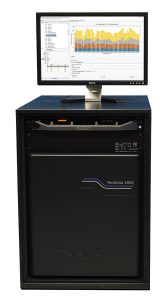
TeraCota – Terahertz Coating thickness analysis

 A Non-Contact, Multi-Layer Coating & Paint Thickness Sensor with Scanning Capability.


Designed for the coatings industry, the TeraCota 2000 sensor can determine the individual thickness of multiple paint layers on both metallic and non-metallic substrates and offers significant benefits over existing techniques.

The sensor is non-contact, suitable for working on curved surfaces and capable of performing horizontal and vertical line scans.

Based on terahertz technology, the sensor represents a significant leap beyond the current method of measurement for quality and process control in automotive paint application, and also provides significant economic and environmental benefits.


for more information click here 

Friday, 24 September 2021

Rotational coherence of encapsulated ortho and para water in fullerene-C60 revealed by time-domain terahertz spectroscopy

Zhukov, Sergey S., Vasileios Balos, Gabriela Hoffman, Shamim Alom, Mikhail Belyanchikov, Mehmet Nebioglu, Seulki Roh et al. "Rotational coherence of encapsulated ortho and para water in fullerene-C 60 revealed by time-domain terahertz spectroscopy." Scientific reports 10, no. 1 (2020): 1-9.

Abstract

We resolve the real-time coherent rotational motion of isolated water molecules encapsulated in fullerene-C60 cages by time-domain terahertz (THz) spectroscopy. We employ single-cycle THz pulses to excite the low-frequency rotational motion of water and measure the subsequent coherent emission of electromagnetic waves by water molecules. At temperatures below ~ 100 K, C60 lattice vibrational damping is mitigated and the quantum dynamics of confined water are resolved with a markedly long rotational coherence, extended beyond 10 ps. The observed rotational transitions agree well with low-frequency rotational dynamics of single water molecules in the gas phase. However, some additional spectral features with their major contribution at ~2.26 THz are also observed which may indicate interaction between water rotation and the C60 lattice phonons. We also resolve the real-time change of the emission pattern of water after a sudden cooling to 4 K, signifying the conversion of ortho-water to para-water over the course of 10s hours. The observed long coherent rotational dynamics of isolated water molecules confined in C60 makes this system an attractive candidate for future quantum technology.

for full paper see https://www.nature.com/articles/s41598-020-74972-3

....We use two commercial THz spectrometers namely, TeraPulse and TeraView to perform the experiments. The sample is cooled down to liquid helium temperatures in an Optistat (Oxford Instruments) helium-flow optical cryostat with Mylar windows. The THz pulse path is purged by nitrogen or vacuumed to exclude water vapor absorption lines. Each signal is obtained by averaging of about 200–500 pulses and accumulating for 30–40 seconds. The step size of the time-delay line movement provides a temporal resolution of 3 fs on the TeraView spectrometer and 8 fs on the TeraPulse spectrometer. In the temperature dependent measurements, the sample temperature is gradually lowered and the THz response of the system is measured at 10-degree steps and after 60 min waiting time......

for more information about TeraView and its products click here.